Beyond Yin-Yang: another vision of duality
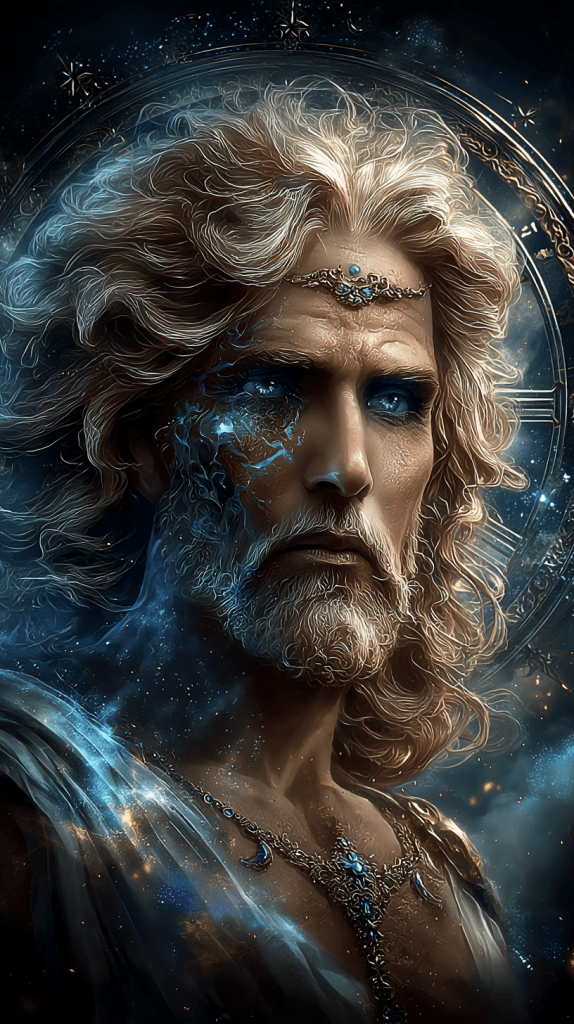
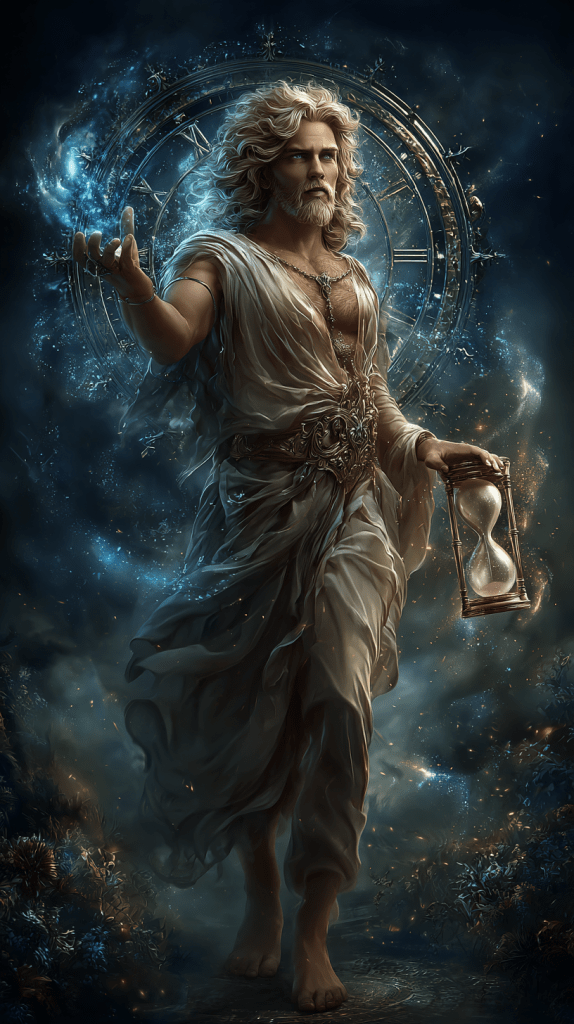
If Chinese philosophy gives us the harmony of Yin and Yang, Zoroastrian tradition tells a different story. At its center stands Zerwan (also known as Zurvan) — the mysterious primordial god of Time, Fate, and Destiny. Through him, the world emerges not as a balance of opposites, but as a cosmic drama, born from unity yet destined for conflict.
Origins: the birth of the twins
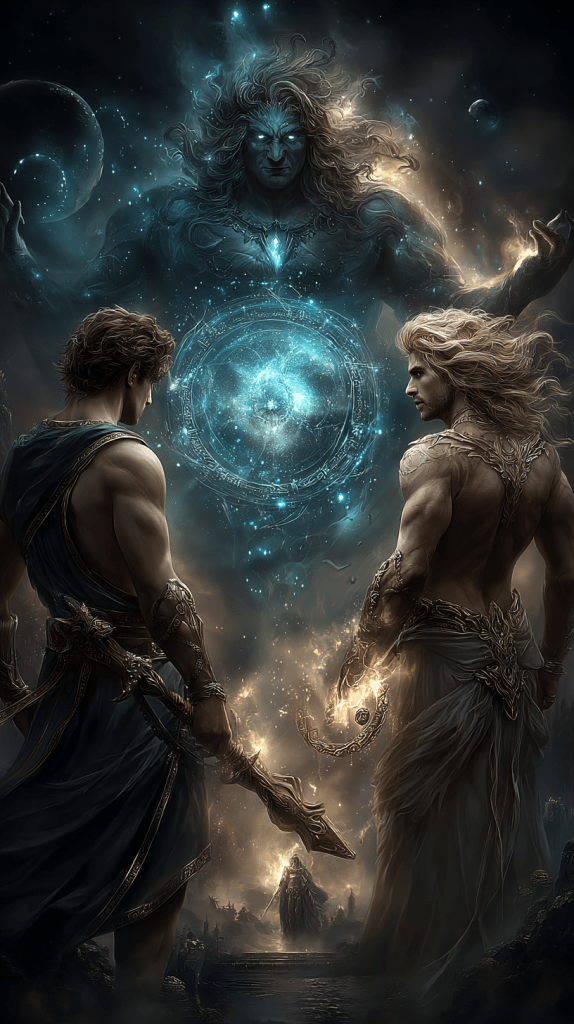
Ancient texts say that Zerwan existed before all creation. For a thousand years he performed sacrifices, hoping to conceive an heir. But in a fleeting moment of doubt, two beings were formed within him: Ahura Mazda, embodiment of light and truth, and Angra Mainyu, the spirit of darkness and chaos.
Zerwan vowed that the first twin to appear would rule the world. Angra Mainyu, cunning and ruthless, forced his way out first. Yet Zerwan, seeing his malice, gave true authority to Ahura Mazda — decreeing 9,000 years of his reign, followed by 3,000 years of Angra Mainyu’s dominion, after which light would prevail forever.
This myth stands in sharp contrast to Yin-Yang. Here, opposites don’t flow into one another — they struggle. It’s not a dance of harmony, but a story of rivalry, with Time itself as their origin.
Time as the supreme reality
Zoroastrianism sees Time in three dimensions:
- Zerwan Akarana (Boundless Time): eternity itself, without beginning or end — the absolute.
- Zerwan Daregho-Khvadhata (Time of Long Dominion): the 12,000-year cosmic cycle in which good and evil battle for the universe.
- Zerwan (Finite Time): the personal thread of destiny, from birth to death.
Through these layers, Time is not just a measure, but the very substance of existence.
Fate, freedom, and human choice
If Time is absolute, then where is our freedom? Zerwanism suggests a paradox: the cosmic framework may be set, yet within it, every person chooses — truth or deceit, light or darkness, order or chaos. In this lies human dignity: we cannot escape Time, but we can decide how to live within it.
This echoes modern debates about determinism and free will, as well as quantum physics, where probability coexists with structure.
Modern parallels
- Cosmology & relativity: Time as a fundamental dimension of the universe.
- Thermodynamics: entropy’s growth mirrors the eternal struggle of chaos against order.
- Psychology: Jung’s Shadow archetype resembles Angra Mainyu — the rejected part of the psyche that needs recognition and transformation.
Living with Zerwan’s wisdom
How can we bring this ancient vision into our lives?
- Mindful presence: anchoring ourselves in the Now as a glimpse of eternity.
- Ritual with fire: meditating on flame, symbol of divine presence and renewal.
- Ethical choice: daily alignment with asha (truth, order) over druj (falsehood, chaos).
- Observing cycles: respecting natural rhythms as reflections of cosmic time.
- Shaping time: creating meaningful rituals and routines to align our finite life with larger patterns.
Conclusion: time as sacred dimension
Zerwanism invites us to rethink time. Not as a resource to spend or save, but as the sacred field in which existence itself unfolds. Unlike the gentle complementarity of Yin and Yang, here we face a cosmic narrative moving towards resolution — a struggle where the end is already written: light will triumph.
And yet, both traditions remind us of the same truth: opposites share one origin. Our individual lives are threads woven into the vast tapestry of Time. We are bound by it, but within its flow, we create our destiny.
 Fog & Fern Myth & Mystery in Art, Words & Light
Leave a comment