The Primordial Gaping
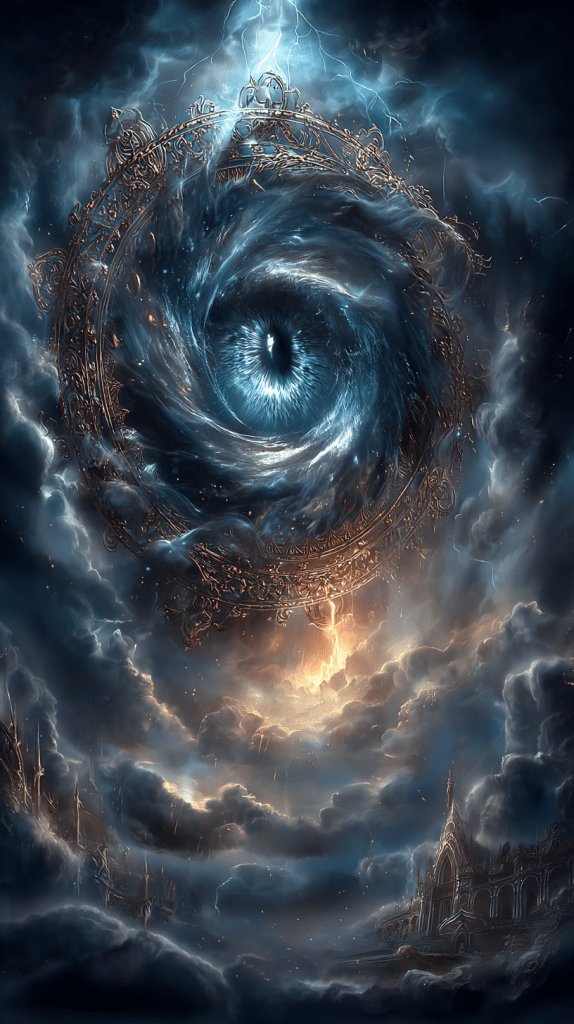
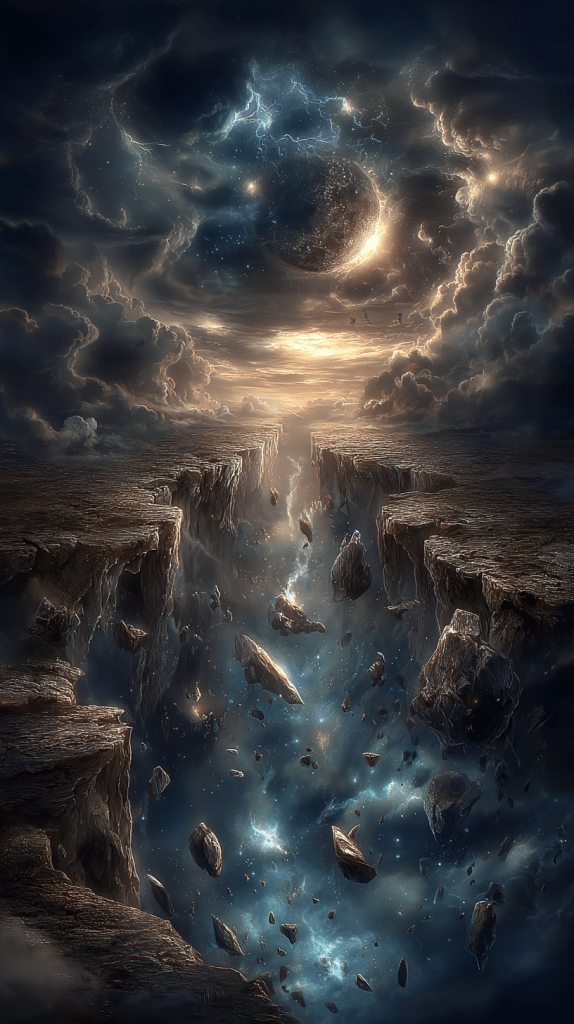
In the very beginning, before there was earth, sky, or gods, there was only Chaos (Χάος). Hesiod, in his Theogony, describes it as the first of all things. Yet Chaos was not disorder in the modern sense, but rather a yawning abyss — a primordial void, not empty, but pregnant with all possibilities.
The Greek word “χάος” comes from the verb χαίνω — “to yawn, to gape open.” Chaos is not confusion, but an opening, a rift in non-being from which the cosmos begins. Not destruction, but the potential for creation.
Creative Emptiness
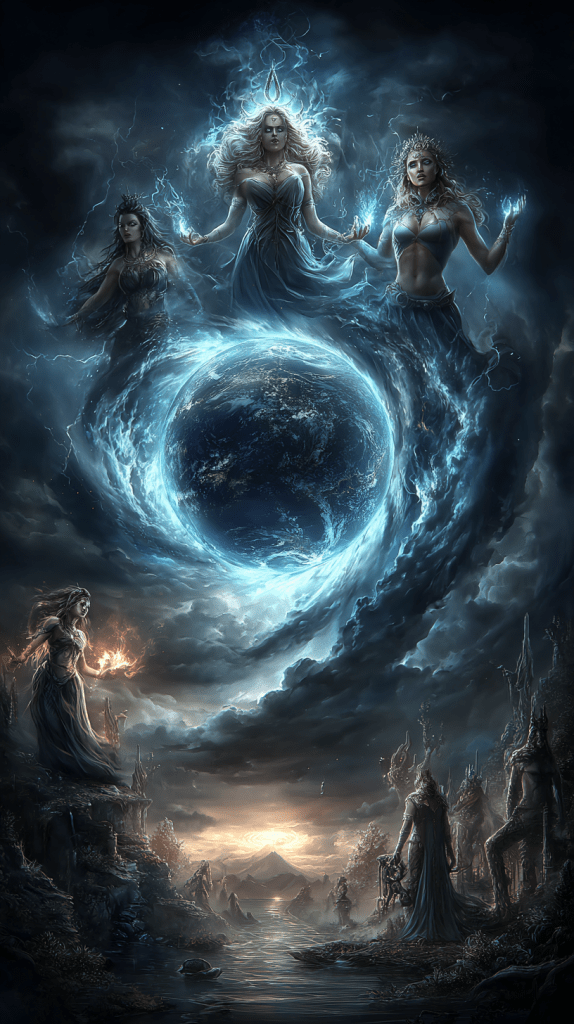
From this primal gap emerged the first cosmic forces:
- Gaia — Earth, the stable foundation of being
- Tartarus — the deep abyss beneath the world
- Eros — the generative force of attraction and love
- Erebus — primordial darkness
- Nyx — Night, the veil of non-existence
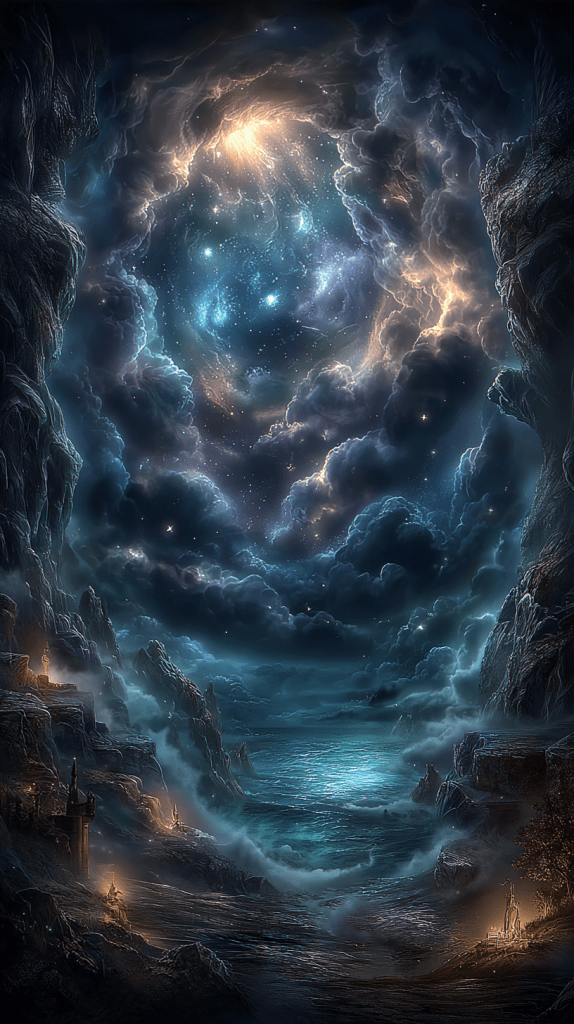
From this void crystallized the essential principles of reality: space, matter, time, life, and consciousness.
Chaos in Philosophy and Psychology
Aristotle saw Chaos not as nothingness, but as τόπος — a “place,” the receptacle for creation. Unlike the Christian concept of creatio ex nihilo (creation out of nothing), the Greek myth insists: even emptiness is a kind of being, simply unformed.
Carl Gustav Jung interpreted Chaos as the archetype of the unconscious — the psychic state before the formation of ego. In times of crisis, a person experiences their own Chaos: loss of orientation, uncertainty, disintegration. But just as from cosmic Chaos arose order, so too from inner chaos can be born new powers and new forms of the self.
Modern neuroscience confirms this intuition: when the mind drifts chaotically, activating the Default Mode Network, it often produces insight and creative breakthroughs.
Chaos in Modern Science
In the 20th century, Chaos returned to the heart of science:
- Thermodynamics revealed the inevitability of entropy — the return to disorder.
- Complexity theory showed that chaos generates new forms of order.
- Fractals uncovered hidden patterns in apparent randomness.
- Chaos theory introduced “deterministic chaos”: systems that are predictable in principle yet unpredictable in practice due to sensitivity to initial conditions (the butterfly effect).
- Quantum physics demonstrated that even the vacuum is alive with fluctuations, recalling the ancient Greek Chaos.
Cosmology, too, echoes this: the singularity of the Big Bang — a state beyond physical law — mirrors the primordial Chaos. Dark energy and the hypothesis of the multiverse resonate with its boundless potential.
Chaos as Mystical Experience
Mystics across traditions described states akin to meeting Chaos:
- The Dark Night of the Soul (John of the Cross)
- Śūnyatā (emptiness) in Buddhism
- Tzimtzum in Kabbalah — the divine contraction making space for creation.
These states may feel terrifying, yet they open the path to transformation and revelation.
Creative Work with Chaos
Chaos can be embraced as a source of inspiration:
- Free writing — letting words flow uncensored
- Improvisation — in music, dance, or speech
- Meditation on emptiness — returning to the state before thought
- Automatic drawing — letting the hand move without control
Each of these practices turns chaos into an ally rather than an enemy.
Existential Meaning
20th-century philosophers — from Kierkegaard to Nietzsche — saw chaos as the ground of human existence.
Nietzsche wrote: “One must have chaos in oneself to give birth to a dancing star.”
In crisis, in the collapse of the old, in the rupture of the familiar, something new is born. Chaos becomes the teacher that leads us through darkness into a deeper harmony.
Conclusion: The Dance from the Void
Chaos in Greek cosmogony is not a threat but a beginning. Not noise, but the fertile silence in which the universe sleeps. A yawning gap from which stars, destinies, and meanings emerge.
In a world obsessed with control and order, the wisdom of Chaos reminds us: sometimes, we must trust the void to let something new arise.
🌀 Chaos is not the enemy of order. It is its mother.

 Fog & Fern Myth & Mystery in Art, Words & Light
Leave a comment